drsneh.skinsoul@gmail.com
(+91) 9321584678


Vitiligo
Our Services
Book an Appointment
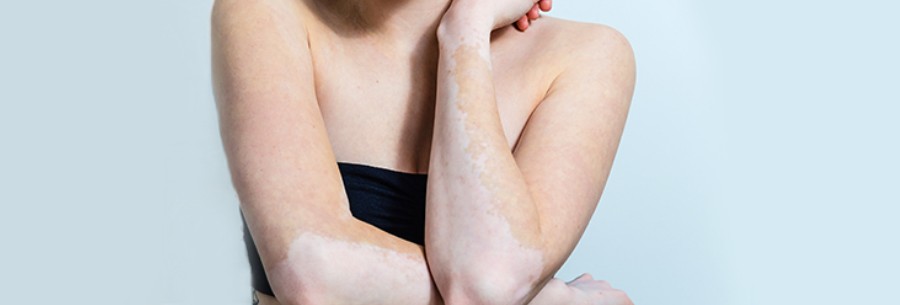
Vitiligo in Navi Mumbai
Skin Soul Clinic offers a comprehensive treatment of vitiligo in Nerul, Navi Mumbai. With a team of experienced dermatologists, our clinic provides personalized care to address the unique needs of each patient.
Vitiligo is a skin disorder marked by depigmentation, leading to the development of white patches on the skin. This occurs when the cells responsible for producing melanin, called melanocytes, are damaged or destroyed.
Melanin is the pigment responsible for imparting color to the skin, hair, and eyes. Although the precise cause of vitiligo remains not completely understood, it is thought to result from a complex interplay of genetic, autoimmune, and environmental factors. It is not contagious or life-threatening, but it can have significant social and psychological impacts on individuals affected by it.
Vitiligo can develop at any age and on any part of the body. The severity and extent of the depigmentation can vary from person to person. There is currently no cure for vitiligo, but various treatment options, such as topical corticosteroids, phototherapy, and cosmetic camouflage, may help manage the condition and improve the appearance of the affected skin.
Visit Skin Soul Clinic to explore effective solutions for vitiligo in Nerul, Navi Mumbai, enhancing skin health, and restoring natural pigmentation in a supportive and professional environment.
Vitiligo Treatment in Navi Mumbai – Skin Soul Clinic
If you are seeking vitiligo treatment in Nerul, Navi Mumbai, Skin Soul Clinic could be a suitable option for you. Our clinic may offer various treatment options for vitiligo, a skin condition characterized by the loss of pigment in certain areas, resulting in white patches.
Our clinic may provide a personalized approach to vitiligo treatment, considering factors such as the extent of the condition, the patient's medical history, and individual preferences. Common treatments for vitiligo may include:
- Topical Steroids: Corticosteroid creams or ointments may be prescribed to reduce inflammation and promote repigmentation.
- Phototherapy (PUVA or UVB): Exposure to ultraviolet (UV) light, either alone or in combination with psoralen (PUVA), can stimulate pigment production in the affected areas.
- Topical Calcineurin Inhibitors: Medications like tacrolimus or pimecrolimus may be recommended to modulate the immune response and encourage pigmentation.
- Micro skin or Camouflage Makeup: Cosmetic solutions can be used to conceal vitiligo patches temporarily, providing a more uniform skin appearance.
- Excimer Laser: This targeted laser therapy focuses on repigmenting specific areas of the skin affected by vitiligo.
Types of Vitiligo
There are different types of vitiligo based on the distribution and pattern of depigmentation. The main types include:
-
Non-segmental Vitiligo (NSV):
- Generalized Vitiligo: This is the most common type, where depigmentation occurs symmetrically on both sides of the body. White patches may appear on various parts of the body, including the face, hands, and limbs.
- Universal Vitiligo: In rare cases, depigmentation may progress to cover almost the entire body.
-
Segmental Vitiligo (SV):
- This type is characterized by depigmentation occurring on one side or a specific segment of the body. It often progresses for a certain period and then stabilizes.
- Mixed Vitiligo:
- Some individuals may exhibit characteristics of both non-segmental and segmental vitiligo.
- Focal Vitiligo:
- In this type, only a few scattered white patches appear on the skin.
- Mucosal Vitiligo:
- Involves depigmentation of the mucous membranes, such as the lips and the inside of the mouth.
Signs and Symptoms of Vitiligo
The signs and symptoms of vitiligo can vary from person to person, but some common indicators include:
- White Patches: The most obvious sign is the presence of depigmented or white patches on the skin.
- Symmetrical Patterns: Vitiligo often develops symmetrically, meaning that if a patch appears on one side of the body, a similar patch will likely appear on the corresponding area of the other side.
- Premature Graying of Hair: People with vitiligo may experience premature graying or whitening of the hair on the scalp, eyebrows, eyelashes, and other body hair.
- Change in Eye Color: In some cases, there may be a change in the color of the iris (the colored part of the eye) or the retina.
- Sensitivity to Sunlight: The depigmented skin areas may be more susceptible to sunburn because of the lack of melanin, which provides natural protection against UV rays.
- Koebner Phenomenon: Some individuals with vitiligo may experience the Koebner phenomenon, where new patches develop at sites of skin injury or trauma.
Failed to connect to MySQL: Access denied for user 'skinsoul_db'@'localhost' (using password: YES)