
Skin Cancer Treatment
Early detection and expert care, when it matters most.
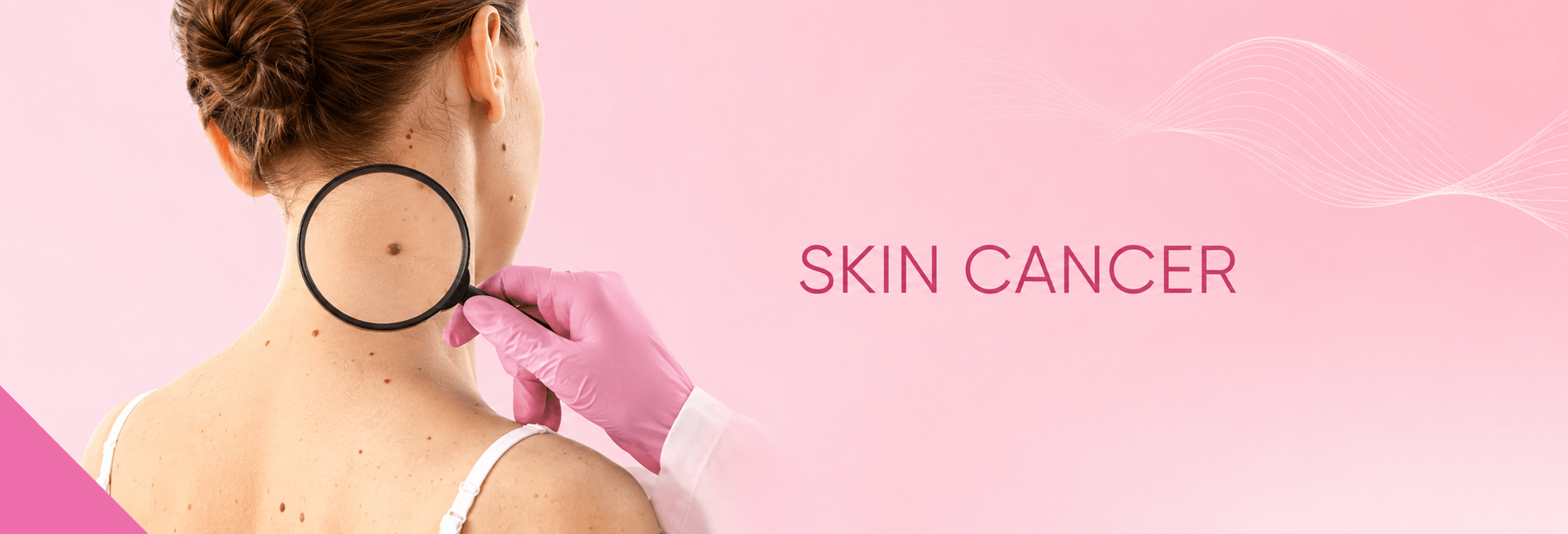
Skin cancer is the abnormal growth of skin cells, most often developing on skin exposed to the sun though it can also occur on areas of skin not ordinarily exposed to sunlight. There are three major types of skin cancer: basal cell carcinoma, squamous cell carcinoma, and melanoma.
You can reduce your risk of skin cancer by limiting or avoiding exposure to ultraviolet (UV) radiation. Checking your skin regularly for suspicious changes can help detect skin cancer at its earliest stages early detection gives you the greatest chance for successful treatment.
At Skin Soul Clinic in Nerul, Navi Mumbai, Dr. Sneh Thadani provides thorough skin examinations and evidence-based guidance for patients concerned about suspicious moles, lesions, or skin changes, with a clear pathway to further diagnosis and treatment when needed.

Dr. Sneh Thadani
MBBS, DNB, Consultant Dermatologist, Trichologist and Cosmetologist
Dr. Sneh Thadani boasts over nine years of experience in the field of cosmetic dermatology, establishing herself as a prominent figure with a diverse clientele of satisfied and content individuals. Dr. Thadani's qualifications, including an MBBS from Terna Medical College and post-graduation in DNB Dermatology from Jaslok Medical College and Research Center, serve as a testament to her clinical expertise.
Dr. Sneh Thadani takes a careful, methodical approach to skin cancer screening examining suspicious lesions against established warning signs and patient history rather than making snap judgments. Where a lesion warrants further investigation, she guides patients clearly through next steps, prioritizing early detection as the single greatest factor in successful outcomes.
Warning Signs to Watch For
Skin cancer can present differently depending on type, but common warning signs across basal cell carcinoma, squamous cell carcinoma, and melanoma include:
- A pearly or waxy bump on the skin
- A flat, flesh-colored or brown scar-like lesion
- A sore that bleeds, scabs, heals, and then returns
- A firm, red nodule or a flat lesion with a scaly, crusted surface
- A mole that changes in color, size, shape, or begins to bleed
- A large brownish spot with darker speckles
- An irregular-bordered lesion with red, pink, white, blue, or blue-black areas
- A painful lesion that itches or burns
- Dark lesions on the palms, soles, fingertips, toes, or mucous membranes
What Causes Skin Cancer?
Skin cancer occurs when mutations develop in the DNA of skin cells, causing them to grow out of control and form a mass of cancer cells. It begins in the skin's top layer, the epidermis which contains squamous cells lining the outer surface, basal cells beneath them that produce new skin cells, and melanocytes in the lower epidermis that produce melanin, the pigment giving skin its color. Where the cancer begins determines its type and treatment options. Much of the DNA damage driving skin cancer comes from ultraviolet (UV) radiation in sunlight and tanning beds, though cancers can also develop on skin not typically exposed to the sun indicating other factors, such as exposure to toxic substances or a weakened immune system, can also contribute to risk.

Basal Cell Carcinoma
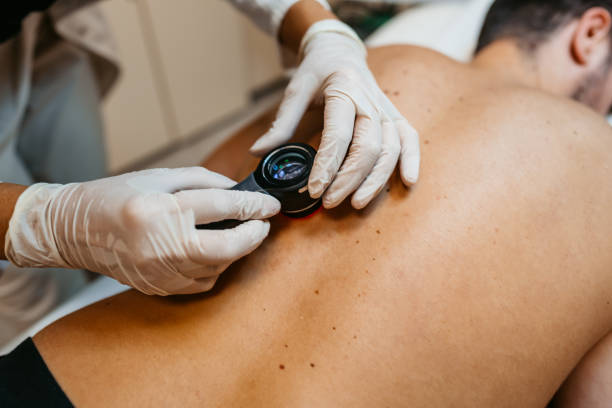
Basal cell carcinoma usually occurs in sun-exposed areas of the body, such as the neck or face. It may appear as a pearly or waxy bump, a flat flesh-colored or brown scar-like lesion, or a sore that bleeds or scabs, heals, and then returns.
Squamous Cell Carcinoma
Squamous cell carcinoma most often occurs in sun-exposed areas such as the face, ears, and hands. People with darker skin are more likely to develop it in areas that aren't often exposed to the sun. It may appear as a firm, red nodule, or as a flat lesion with a scaly, crusted surface.
Melanoma
Melanoma can develop anywhere on the body, in otherwise normal skin or in an existing mole that becomes cancerous. It most often appears on the face or trunk in men, and on the lower legs in women, though it can occur on skin that hasn't been sun-exposed in either. In people with darker skin tones, melanoma tends to occur on the palms, soles, or under the fingernails or toenails. Signs include a large brownish spot with darker speckles, a mole that changes in color, size, or feel, or that bleeds, a small lesion with an irregular border and red, pink, white, blue, or blue-black portions, a painful lesion that itches or burns, and dark lesions on the palms, soles, fingertips, toes, or mucous membranes.
Less Common Skin Cancers
Kaposi sarcoma is a rare form developing in the skin's blood vessels, causing red or purple patches on skin or mucous membranes it mainly occurs in people with weakened immune systems, including those with AIDS or those on immunosuppressant medication after an organ transplant, as well as young men in Africa or older men of Italian or Eastern European Jewish heritage. Merkel cell carcinoma causes firm, shiny nodules on or beneath the skin and in hair follicles, most often found on the head, neck, and trunk. Sebaceous gland carcinoma is an uncommon, aggressive cancer originating in the skin's oil glands, usually appearing as hard, painless nodules that can develop anywhere but most often occur on the eyelid, where they're frequently mistaken for other eyelid problems.
Risk Factors
Fair skin, light-colored eyes, and blond or red hair provide less natural protection from UV radiation, raising risk. A history of blistering sunburns in childhood, adolescence, or adulthood increases risk, as does excessive sun exposure or use of tanning beds. Living in sunny, warm, or high-altitude climates increases UV exposure. Having many moles or abnormal (dysplastic) moles raises risk, as does having precancerous skin lesions such as actinic keratoses. A family or personal history of skin cancer, a weakened immune system (including HIV/AIDS or immunosuppressant medication), prior radiation treatment for conditions like eczema or acne, and exposure to certain substances such as arsenic can all increase risk.
Prevention
Avoid the sun during the middle of the day, when UV rays are strongest clouds offer little protection, and UV radiation accumulates year-round. Wear a broad-spectrum sunscreen with SPF 30 or higher daily, reapplying every two hours or more often when swimming or sweating. Wear protective clothing that covers arms and legs, along with a broad-brimmed hat, and sunglasses that block both UVA and UVB rays. Avoid tanning beds entirely. Be aware that some prescription and over-the-counter medications, including certain antibiotics, can increase skin sensitivity to sunlight. Check your skin regularly for new growths or changes to existing moles, freckles, bumps, or birthmarks, using mirrors to examine your face, neck, ears, scalp, trunk, arms, legs, feet, and other less-visible areas and report any changes to your doctor.
When to See a Doctor
Make an appointment if you notice any changes to your skin that concern you. Not all skin changes indicate skin cancer, but a proper evaluation is the only way to determine the cause with confidence.
Concerned about a mole or skin change?
Book a consultation with Dr. Sneh Thadani for a thorough skin examination and expert guidance.
Book a Consultation